


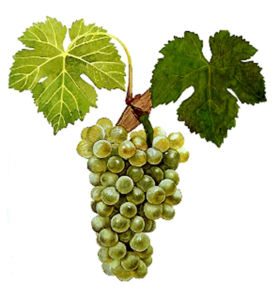
 In 2015, we wrote a piece for the Silkbush blog entitled: Viognier… Deep in the Heart of Texas! Both because we are very successful with Viognier on our South African vineyard, and the fact it is a wine few Americans have experienced, we remain on a quest to learn more about the grape, where it does well, and share it with the world. Therefore, when we recently read on Forbes Media “Will Viognier Become Southern Oregon’s Signature White Wine,” we were highly impressed with the author, Joseph V Micallef, and his in-depth review of the area. His modestly truncated text appears below:
Viognier is a white grape variety. Its origins are unknown. It is widely believed that it originated in Croatia and was brought to the Rhone Valley by the Romans, although there is no evidence of this. Genetic analysis, however, indicates that it is related to Freisa and Nebbiolo, two Piedmontese red grape varieties, and that it may also be either a half-brother or grandparent of Syrah. Considered one of the “noble” grape varieties, it reaches its most sublime expression in the northern Rhone Valley, where it is the only grape variety permitted for the production of white wines in the Condrieu appellation.
The variety almost became extinct. It proved to be particularly susceptible to diseases, especially powdery mildew and phylloxera, and its cultivation steadily decreased. By 1965, there were only about 30 acres left of Viognier vineyards in the northern Rhone. Since then, it has made a remarkable comeback.
Today, there are over 13,000 acres of Viognier under cultivation in France; mostly in the Rhone and Languedoc. Additionally, it is widely grown in the U.S., especially in California (3,000 acres), Oregon and Virginia, as well as in Canada, Chile, Argentina, Australia, New Zealand, Israel, Japan and South Africa.
Viognier is a difficult grape to grow. It’s early budding and is vulnerable to spring frosts. In addition to being disease prone, its yield is low and often variable. It requires a long growing season to fully develop its aromatic potential, but it is sensitive to high heat levels. In hot climates, the grapes can develop high sugar levels before the aromatic notes are fully developed.
According to Kiley Evans, winemaker at 2Hawk Winery, and one of Oregon’s top Viognier producers, “the picking window on Viognier can close abruptly … if you wait to pick until the berry or cluster samples are where you want them, you’re too late. Sometimes the harvest window can be only 2 or 3 days.”
Vinification is equally tricky. The skins of Viognier grapes are high in phenolic compounds that can give wines a bitter, astringent quality; hence skin contact needs to be minimized and crushing must be gentle. The distinctive aromatic notes that make Viognier so memorable can be easily lost to oxidization and excessive handling. Barrel fermentation can be exceptionally challenging.
There are more than 60 clones of Viognier that have been identified. Additionally, older U.S. plantings of Rousanne were often mislabeled Viognier. Wine expert Remington Norman, MW, has identified two distinct strains of Viognier. The “Old World” strain is most common in Condrieu while the “New World” strain is most common in Languedoc and outside of France. The two strains produce very different wines. The New World strain seems to be more heat tolerant, but produces wines that have less intensity and aroma than those produced in Condrieu.
In the U.S., newer plantings of Viognier typically utilize one or more of three clones: 642, 1042 and 1051. All three are based on selections made by ENTAV, a French organization that, “selects, grows and tests the best clones out of France.” All the selections came from vineyards in Condrieu. Most Viognier producers do not give any clonal information on the bottle.
Viognier Grapes
At its best, Viognier produces a rich full-bodied wine with pronounced floral and fruit aromatics, especially notes of peach, apricot, pear, melon and tropical fruits, along with floral aromas of honeysuckle and violet and a sweet gingerbread spiciness, accompanied by an earthy white pepper herbal quality. On the palate it can be soft, lush and smooth, especially if it is barrel fermented and gets extended time on its lees.
The acidity is usually subdued. That’s one reason why Viognier is rarely used for late harvest wines and why when picked late it can result in overly sweet, high alcoholic, flabby wines. Often times its pronounced aromatics can be accompanied by a core of minerality, although this is often lost when barrel fermented. The wine often appears sweet on the nose, but is usually dry on the palate.
Viognier in Southern Oregon
Historically, Pinot Gris has been considered Oregon’s signature white grape varietal. In the Willamette Valley, it has been joined by Chardonnay and Riesling to form a triumvirate of increasingly lauded white wines. In Southern Oregon, on the other hand, it has been Viognier that has increasingly established itself as the region’s signature white grape varietal. Southern Oregon’s long, dry summers, and the microclimates afforded by the varying aspects and elevations of the region’s rolling terrain, create pockets that are ideally suited for Viognier.
According to Bree Stock, MW, the Education Manager at the Oregon Wine Board:“The growing climate of Southern Oregon becomes remarkably cool in September and often stalls fruit ripening. The combination of high UV and huge diurnal temperature shifts in the Rogue Valley also promote those cool climate peppery aromatics.” It’s still a work in progress however. When Southern Oregon’s Viognier is good, it is world class good. It can also be lackluster, lacking the distinctive aromatics of the varietal and more akin to a mass-produced, budget Chardonnay. Vineyard location, vintage and winemaker are the key to distinguishing the exceptional from the common

 Not surprisingly, the French recognize Hong Kong is as a key Champagne market. In 2016, Hong Kong ranked second in Asia and 14th worldwide among export markets for Champagne. How to make headway against the French wine dominance, therefore, and increase RSA wine market share in HK, and its visibility is the key question. With 80% of the HK population transient at any given time, gaining attention is a major challenge (for any wine region other than France). Certainly people on vacation or business are not spending much time absorbing local media offerings. Therefore, it appears to us that the approach must be via restaurants, hotel bars, upscale retail outlets, and perhaps coordination with Internet travel agencies.
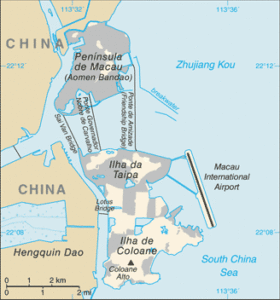 Any discussion of HK without considering Macau/ Macao, the former Portuguese colony 40 miles across the water from HK, would be an oversight. Macau is a Special Administrative Region of China, just like HK but much smaller; with a population of 650,900 living in an area of 30.5 km2 (11.8 sq mi), it is the most densely populated region in the world. However, because Macao is the only place in Greater China where it’s legal to operate a casino; accordingly, gambling and tourism became the largest sectors of Macao’s economy and Tourist arrivals in 2016 exceeded 30 million. Since 2006, its gaming revenue has been the world’s largest.
 Since 1994, RSA wine quality has risen quite steadily to very high levels. Extensive replanting of vineyards has taken place, and wine making technology and training has improved dramatically. Accordingly, the acceptance, and more recently, the sustained accolades of the international wine journalist community have been attained. Despite these achievements, the penetration of foreign wine markets with consumer sales of RSA branded wines has not kept pace. In the US, bottled RSA wine sales have remained at approximately 1 million cases/year for over 10 years, while the total USA wine market continues to grow, presently more than 399 million cases per year, including sparkling wine, and that over 14% alcohol. Annual US wine sales growth, however, has slowed to about 2.5% to 3%+ in recent years, which does not make things easier and many more US wineries are created annually. (Total US wineries, which exist in all 50 states, is fast approaching 10,000.) With more US producers in the market every year, and extensive local promotional efforts by US wineries, many large US grocery store chains no longer carry any selections from RSA; retail distribution has shrunk in numerous areas. Imported wines constitute 33% of US wine sales, but clearly those sales proceeds are largely going to other wine producing regions of the world. (RSA wine share of US market is a meager 1/4 of 1%!)